Glass facades
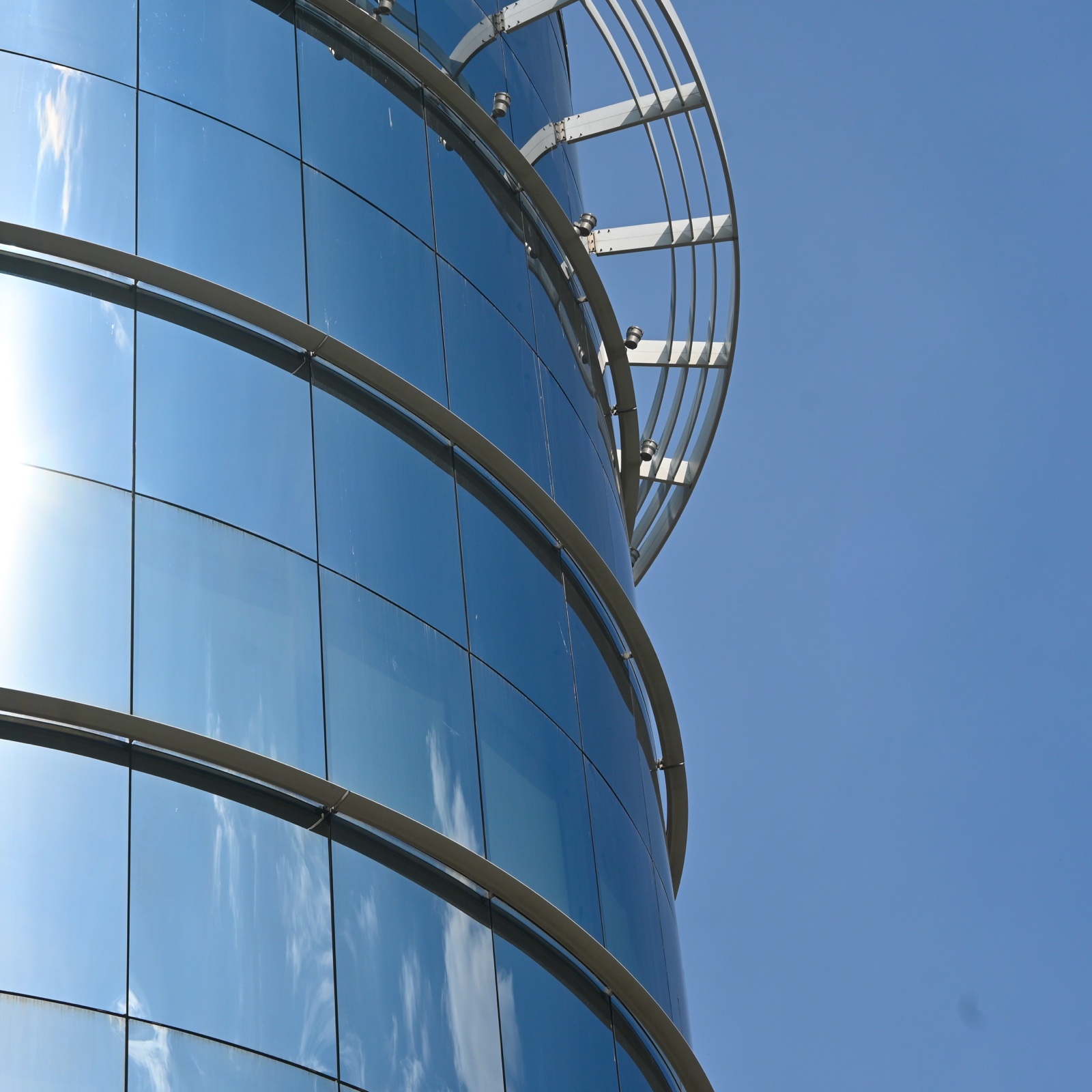
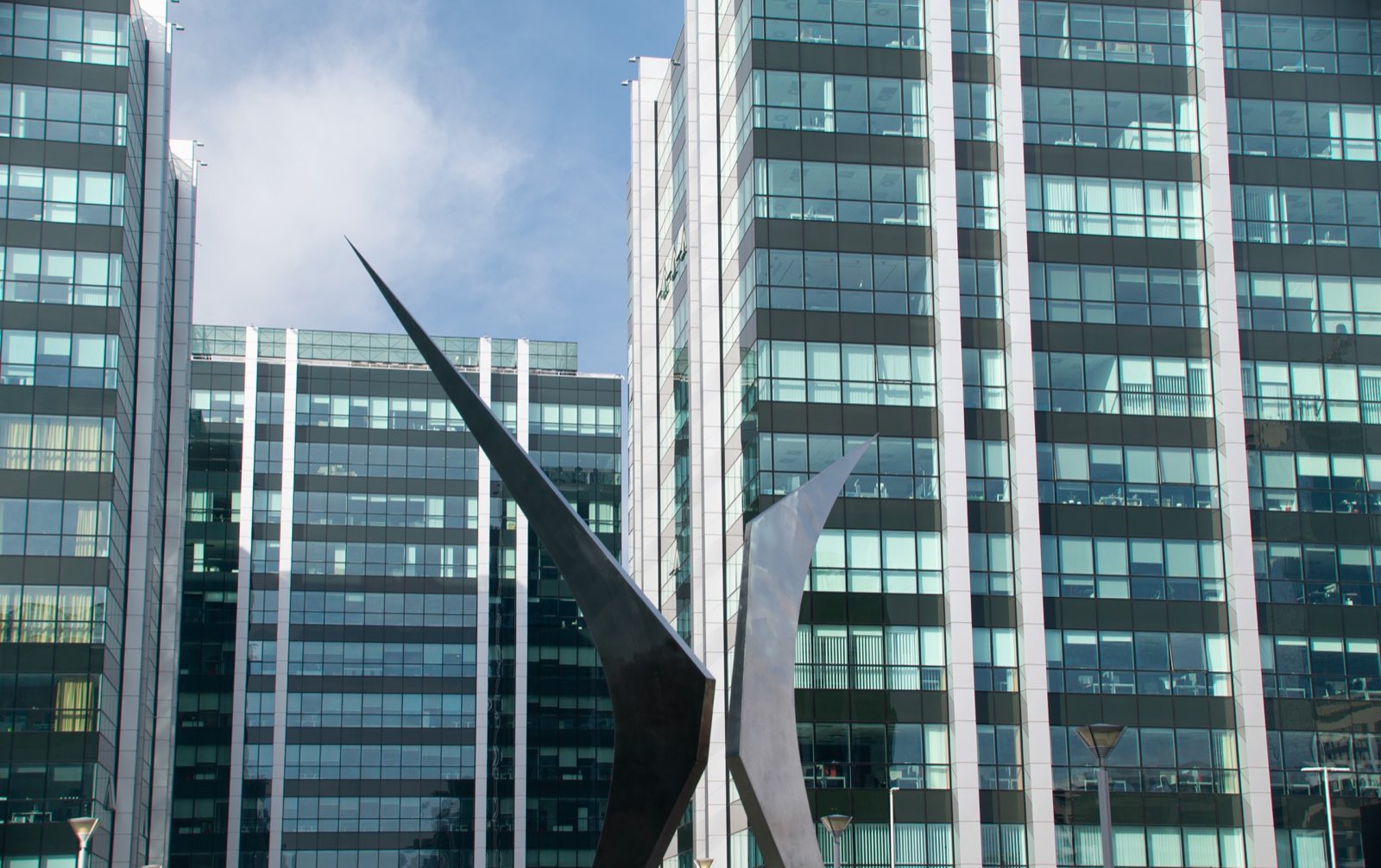
Glass is the primary facade material of contemporary architecture. The building gains a continuous surface with no visible transitions, while the tint of the glass, the ratio of transparent to opaque areas and the division of the facade determine how the building reads from the outside.
Energy efficiency
A facade defines not only the appearance of a building, but also the amount of daylight inside and the energy consumed for heating and cooling.
The energy performance of glass is described by three values: LT — light transmittance, g-value — solar energy transmittance, and Ug-value — thermal transmittance.
A higher LT value means more daylight in the space and less need for artificial lighting. A lower Ug value means lower heat losses in winter. The g-value determines how much solar energy enters the space and therefore directly affects the energy consumed for cooling.
With energy efficiency regulations becoming ever stricter, these values are now part of the design brief rather than something decided at a later stage.
Configuration
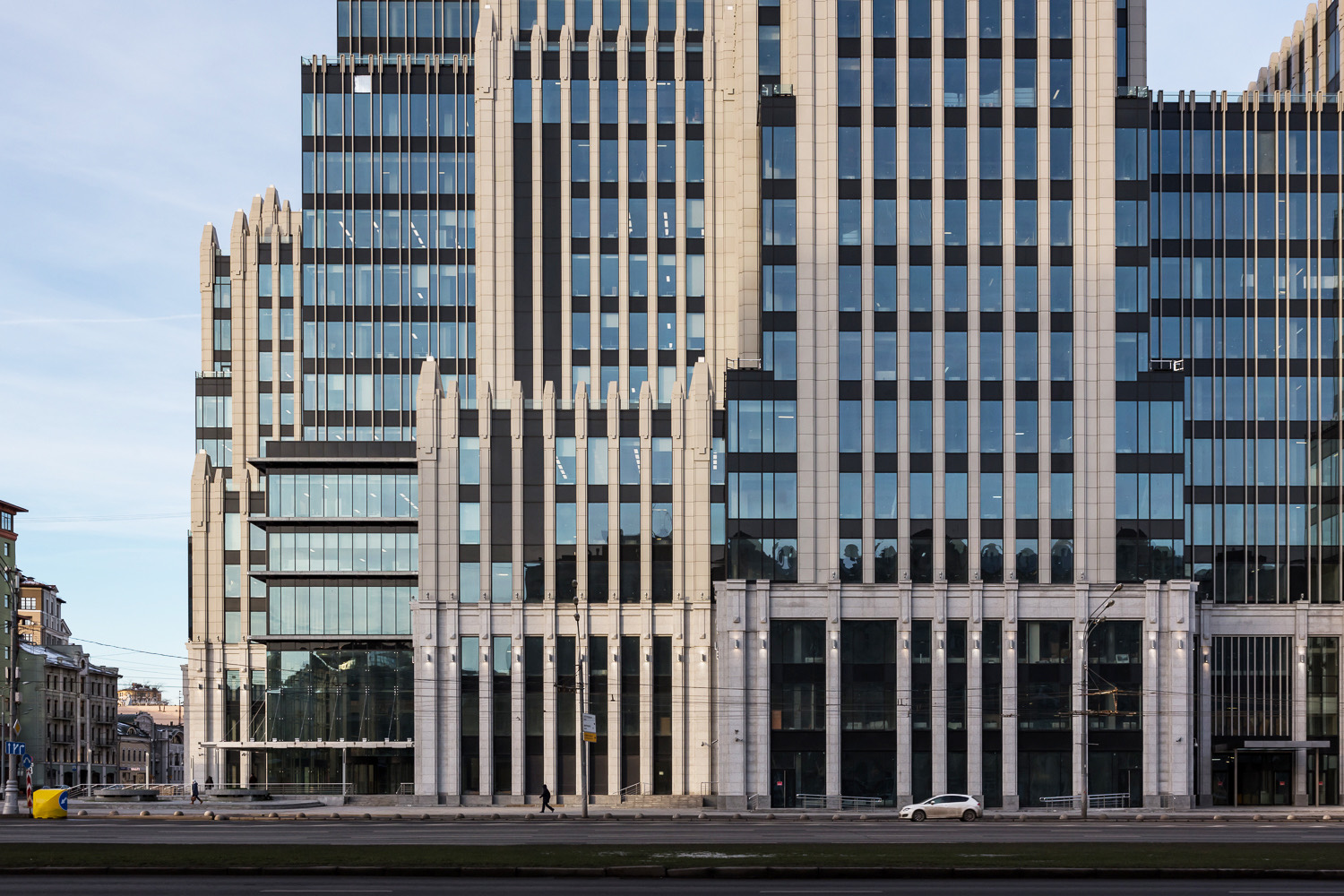
The build-up of an insulating glass unit is specified according to the building's use and the orientation of the facade — no single solution suits every position on a building. Coatings on the glass determine the energy performance of the unit, while glass processing determines its safety properties.
Coatings
A coating is a microscopically thin layer of metal oxides applied to the glass. The energy efficiency of the unit depends on it more than on anything else.
Argon
The cavity between the panes is filled with argon instead of air. Argon has lower thermal conductivity, which further reduces heat loss through the unit.
Spacer (spacer bar)
The spacer separates the panes and defines the width of the cavity. It contains a desiccant that absorbs residual moisture from the cavity and prevents fogging on the inside of the unit.
Butyl and silicone
The unit is sealed around its perimeter in two layers. Butyl forms the primary barrier — it prevents gas from escaping the cavity and moisture from entering it. Silicone provides the secondary, structural seal and holds the panes together.
Tempered glass
Tempering gives glass many times greater mechanical strength and resistance to temperature differences, which arise on a facade between sunlit and shaded areas of the same pane.
Laminated glass
When broken, laminated glass retains the fragments on the interlayer, so the pane stays in its opening even after damage.
Enamelled glass
We make spandrels and other opaque parts of the facade from enamelled glass, in which the colour is fired into the glass surface itself. This layer does not fade in the sun or wear off during service, so the facade reads as a single surface, with no visible difference between the vision and opaque areas.
Bent glass
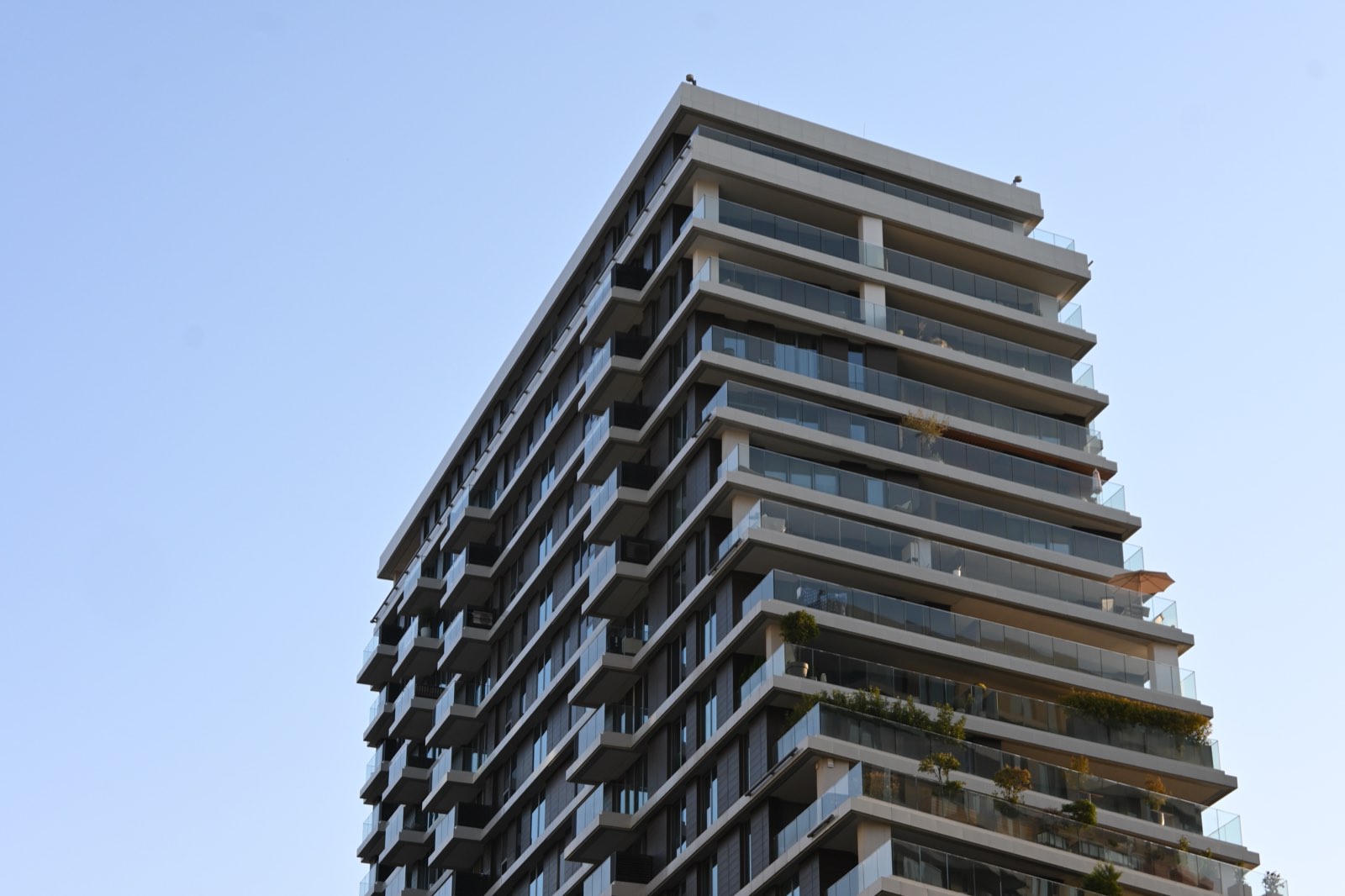
For rounded corners, curved facades and non-standard forms we produce bent glass, which avoids approximating the curve with a series of flat panes.